What Happens In The Kitchen
A Professional Embroidery Designer’s Take on Brand Merchandise Use
As an experienced embroidery designer, I’m often asked to evaluate designs for commercial use in small business merch. What Happens In The Kitchen is a design that immediately caught my attention with its playful yet approachable vibe. It feels like the kind of design that can bridge the gap between fun and professionalism—perfect for businesses looking to add a touch of personality without sacrificing quality.
First Impressions: Friendly and Versatile
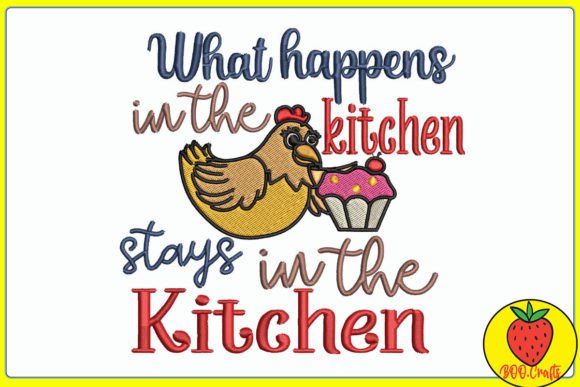
The title itself, “What Happens In The Kitchen,” suggests a theme that’s both relatable and adaptable. It has a friendly, conversational tone that aligns well with small businesses in the food, home, or lifestyle sectors. Visually, it appears clean and well-structured, with a balance of text and imagery that makes it easy to read at a glance. The design feels modern and approachable, making it suitable for a wide range of applications—from casual wear to branded merchandise.
Real Business Use: From Patches to Tote Bags
What Happens In The Kitchen is designed to work across multiple product types, which is a major plus for small businesses looking to diversify their offerings. Here are some key use cases:
- Embroidered Patches: The design holds up well in smaller formats, though it should be tested at patch size to ensure clarity and detail retention.
- Staff Uniforms: It could serve as a subtle accent on aprons or shirts, adding character without overpowering the overall look.
- Cap Embroidery: The front of a cap is a prime spot for this design, especially when paired with a contrasting thread color.
- Tote Bag Design: The design’s layout works well on flat surfaces, making it ideal for tote bags or canvas prints.
- Product Packaging Accents: It can be used as a brand signature on labels, tags, or packaging, reinforcing visual consistency.
- Custom Apparel: Whether it’s a shirt, hat, or towel, the design adds a personal touch that resonates with customers.
Considerations for Commercial Embroidery
While What Happens In The Kitchen is versatile, there are a few things to consider before using it in production:
- Small Patch Sizes: The design may lose detail at very small sizes, so testing on a mockup is essential.
- Curved Surfaces: Items like caps or curved aprons may require adjustments to maintain legibility.
- Tiny Lettering: If the design includes fine text, it’s important to verify that it remains readable after embroidery.
- High Stitch Density: Ensure the design doesn’t become too dense, which can affect stitching speed and quality.
- Textured Fabric: On fabrics with texture, the design might not appear as crisp as on smoother materials.
- Dark Uniforms: A white or light-colored thread will provide better contrast on dark backgrounds.
- Frequent Washing: The design should be durable enough to withstand regular use and cleaning.
Impact on Brand Identity and Customer Engagement
What Happens In The Kitchen has the potential to strengthen brand identity by creating a memorable visual element that customers can easily recognize. Its friendly tone and approachable style make it ideal for businesses that want to convey warmth and authenticity. When used consistently across different products, it helps build trust and reinforces the brand’s personality.
Additionally, the design can enhance customer engagement by adding a unique and personal touch to merchandise. Whether it’s a branded apron for a café or a custom cap for a boutique, the design adds value to the finished product while maintaining a professional appearance.
Practical Embroidery Notes for Success
To ensure the best results when using What Happens In The Kitchen, here are some practical tips from a professional embroidery designer:
- Test in Black and White: This helps identify any issues with contrast or detail before finalizing the design.
- Check Small Patch Size: Ensure the design remains clear and legible at the smallest usable size.
- Review Thread Color Contrast: Choose colors that stand out against the fabric, especially on dark backgrounds.
- Inspect Spacing: Proper spacing between elements ensures the design looks balanced and professional.
- Confirm Hoop Size: Make sure the design fits within your machine’s hoop without distortion.
- Test on Real Fabric: Always test the design on actual fabric to see how it performs in real conditions.
- Use Proper Stabilizer: This helps prevent puckering and ensures a smooth finish.
- Create a Mockup: Show the design on a realistic product to get feedback before production.
- Compare with Other Assets: Ensure the design aligns with other branding elements for visual consistency.
- Confirm Commercial Licensing: Verify that you have the right to use the design for business purposes.
Conclusion: A Strong Choice for Small Business Merch
What Happens In The Kitchen is a well-crafted design that offers versatility and personality for small business merch. Its ability to adapt to various product types makes it a valuable asset for embroidery shops, custom apparel creators, and handmade brands. With the right preparation and attention to detail, this design can elevate your brand’s visual presence and create meaningful connections with your audience.